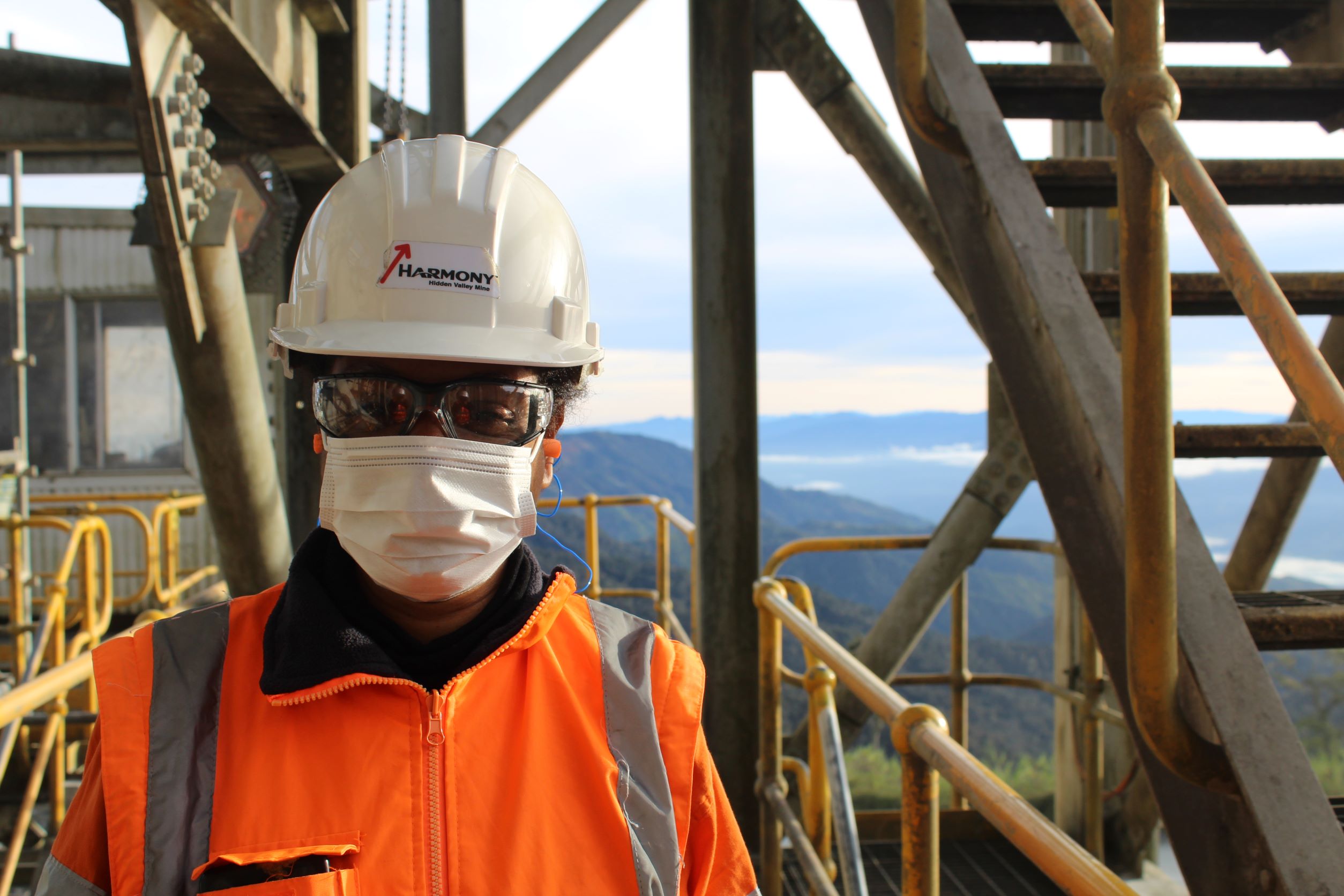
For over 75 years, Harmony has set the benchmark for sustainability in South African gold mining. From our rich legacy and the responsible way we mine, to our commitment to environmental stewardship and community upliftment, sustainability is not just part of our business – it is the foundation of everything we do.
2020 – 2025
GROWTH
Allocating capital to higher-quality assets and key projects
During this period, we have bolstered our portfolio through the strategic acquisition of and investment in higher-grade, higher-margin operations and projects.
We acquired the high-grade Mponeng and Moab Khotsong mines and the Mine Waste Solutions retreatment operation in South Africa as well as the CSA copper mine in Australia. We are investing in the Zaaiplaats extension, the Kareerand extension and the Eva Copper projects to build a pipeline of projects that we can take up the value curve.
Our meaningful investments in organic and inorganic growth will ensure we continue delivering long-term value creation for all our stakeholders.
- Acquired MAC Copper and its wholly owned CSA copper mine in Australia effective 24 October 2025
- First phase of the Kareerand TSF extension at Mine Waste Solutions successfully completed in November 2024, extending the operation’s life to 2040
- In March 2024, Eva Copper project granted conditional funding of A$20.7 million by Queensland state government
- A 30MW solar plant in the Free State commissioned in August 2023
- Harmony and Wafi-Golpu joint venture partner, Newmont, signed a non-binding framework MoU with government of Papua New Guinea in April 2023
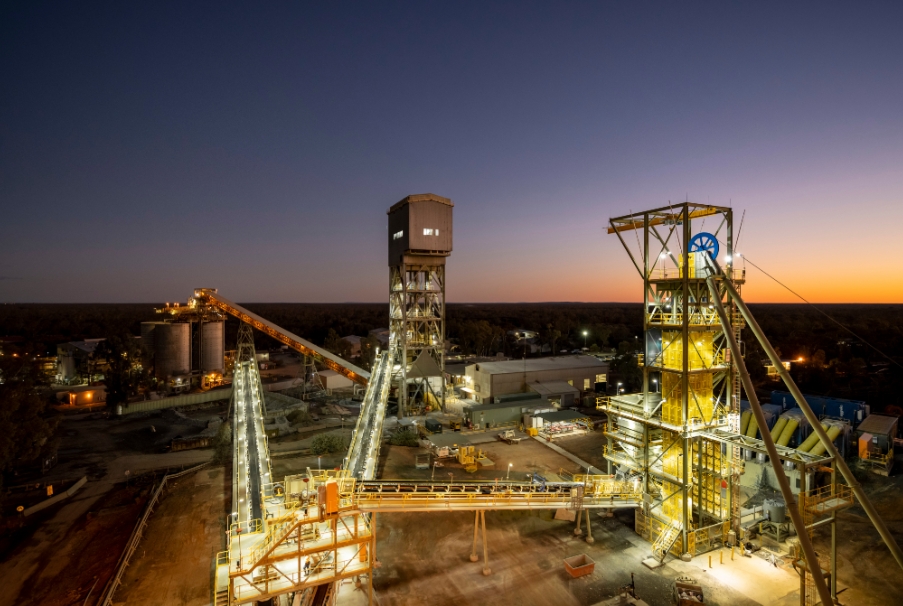
- Acquisition of the Eva Copper project in Queensland, Australia, concluded in 2022, marking the start of Harmony’s strategic diversification into a future-facing metal
2016 – 2020
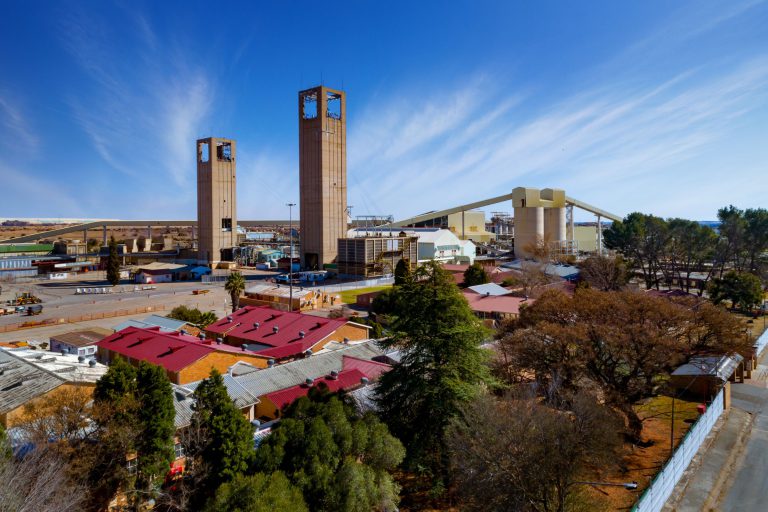
- Harmony concludes acquisition of Mponeng, Mine Waste Solutions and related assets in September 2020
- South Gauteng High Court approves silicosis class action settlement
- Third iteration of the Mining Charter gazetted on 27 September 2018
- Moab Khotsong and Great Noligwa mines acquired in March 2018
- First ever fatality-free period for Harmony as a group recorded for June 2017 quarter
- Full ownership of Hidden Valley acquired in October 2016
2010 – 2015
STRATEGIC INVESTING
Becoming South Africa’s foremost gold producer
Through disciplined cost control and strategic investments in higher-margin projects and operations, Harmony achieved record production volumes making us South African’s largest gold producer.
- In 2010, Hidden Valley, Harmony’s first offshore greenfields project in a joint venture with Newcrest Mining Limited, was officially opened
- By June 2010, 26% of Harmony’s shareholders were based in the United States
- In 2011, exploration and feasibility study results confirmed the viability of the Wafi-Golpu project held by the joint venture between Harmony and Newcrest
- In 2012, Harmony launched its first employee share ownership plan – the Tlhankanelo Employee Share Trust – benefitting 33 000 Harmony employees
- In 2013, we vendor-financed the disposal of 25% of Free State-based Phoenix Tailings operations; an additional 5% was given to the Community Trust, controlled by Harmony
- First-ever fatality free period reported by our South African operations for the December 2014 quarter
2002 – 2009
GLOBAL FOOTPRINT
Creating a diversified asset and ownership base
- Legislation governing the South African mining industry was overhauled with the promulgation of the Mineral Resources and Petroleum Development Act 28 of 2002
- Harmony transferred its listing from Nasdaq to the New York Stock Exchange in November 2002
- Acquired a 50% share of Freegold which included the Joel, Phakisa, Tshepong and Bambanani mines
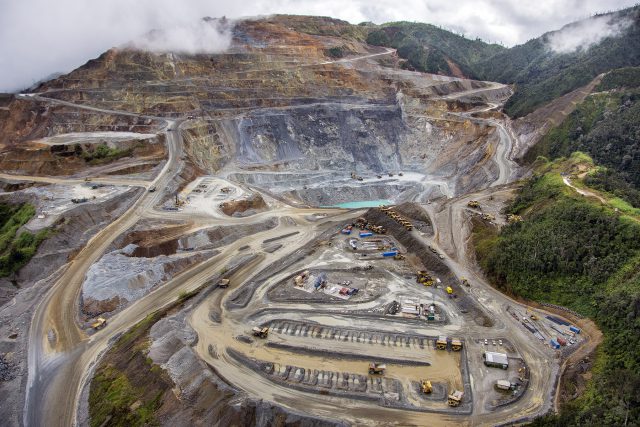
- In 2002, Harmony entered Papua New Guinea, acquiring an initial stake in the Hidden Valley exploration project
- In 2003, a landmark deal was successfully concluded whereby black economic empowerment firm African Rainbow Minerals Gold acquired a 20% stake in Harmony. This was hailed as one of the most important empowerment deals of South Africa’s first decade of democracy, being a microeconomic reflection of the country’s political miracle of 1994
- Through this empowerment deal, Harmony fully acquired the Freegold operations
- On 1 October 2003, Dr Patrice Motsepe was appointed chairman
- The first iteration of the Mining Charter was released in 2004
- Harmony’s acquisition campaign continues into 2004 with the purchase of Avgold, which owned the Target mine
- Harmony began a prefeasibility study, based on the resource defined at that time, as well as a substantial exploration campaign on the Wafi- Golpu prospect in Papua New Guinea
- In 2007 and 2008, Harmony buys back royalties over Hidden Valley and Wafi-Golpu held by Rio Tinto
- In 2008, the Morobe Mining Joint Venture, a 50:50 partnership between Harmony and Australian mining company, Newcrest Mining Limited, was established
1996 – 2001
UNITY
Forging an independent, multi-operation company
- Harmony’s era of growth and expansion began with the its initial listing on the Nasdaq in 1996
- The Constitution of the Republic of South Africa, widely considered as one of the most progressive in the world, was approved by the Constitutional Court on 4 December 1996, taking effect on 4 February 1997
- The service agreement with Randgold & Exploration was terminated in 1997 at which point Harmony began operating as a completely independent gold mining company
- From 1997, Harmony embarked on an acquisition strategy to expand the company from being a single-lease mining operation to becoming an independent, multi-operation, world-class gold producer, commencing with the acquisition of Lydenburg Exploration Limited, as well as the Unisel, Grootvlei and Consmodder operations
- Between 1998 and 2000 Harmony acquires additional mining rights in the Free State, Mpumalanga, Gauteng and North West provinces in South Africa:
- Evander and Masimong in 1998
- Kalgold in 1999
- Randfontein in 2000
- Elandskraal in 2001
1950 – 1995
IN THE BEGINNING
The early years
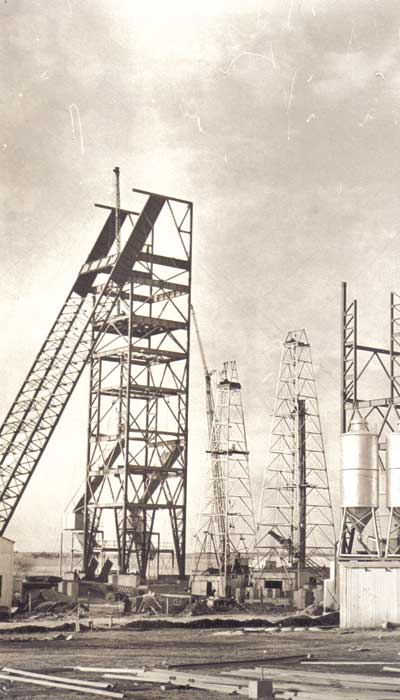
- Established on 25 August 1950 as a public company with the purpose of operating the Harmony mine, a single mine lease in the Free State; it was formed as a subsidiary of the mining finance house Rand Mines
- Listed on the Johannesburg Stock Exchange in 1951
- First gold poured in September 1954
- Production of uranium began in 1955
- On 31 May 1961, South Africa officially became a Republic
- In 1972, ownership of Harmony was transferred to Barlow Rand Group following the merger of Barlow and Rand Mines, which effectively created one of the largest industrial corporations in South Africa
- In 1973, Harmony merged with the Anglovaal-owned Merriespruit and Virginia mines to formally establish Harmony Gold Mining Company Limited. The amalgamated operation had a lease area of 9 933.67ha
- In 1992, the gold interests of Barlow Rand, including Harmony, were spun out into the newly-incorporated Randgold & Exploration
- South Africa held its first non-racial democratic elections in 1994
- In late 1994, Randgold canceled its management agreement with Harmony and entered into a service agreement to supply executive and administrative services at market rates